
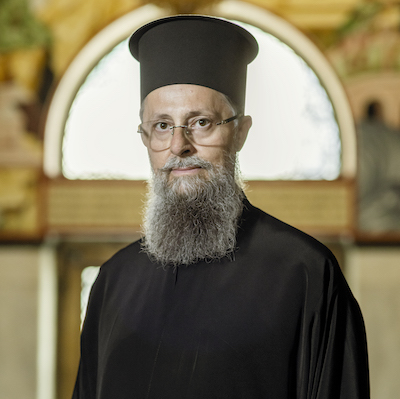
Ladies and Gentlemen,
The issue of the national sovereignty of the Member States has often been discussed in the context of the functioning of the European Union. It is generally accepted that part of this sovereignty is transferred, so that common procedures can be applied more effectively within a united Europe.
The reasoning behind this approach rests upon the modern understanding that every State naturally tends towards the exercise of sovereignty and therefore regards sovereignty as an essential element of its political existence.
However, a fundamental conclusion follows: if every State claims sovereignty in absolute terms as an inalienable right, then the very possibility of effective international organisations and institutions is called into question.
At a time when the usefulness and effectiveness of international organisations have repeatedly been questioned, among other reasons because of geopolitical crises, it has also been argued that international organisations and institutions may come under pressure when Member States seek to reaffirm their sovereignty through various forms of non-compliance with international obligations and commonly accepted institutional rules.
This leads us to a twofold question:
When do these challenges threaten the very survival of international organisations, and what are the factors that enable them to endure in the face of such challenges?
With particular satisfaction, therefore, we may observe that the European Union has adopted a different approach in the field of religion.
Article 17 of the Treaty on the Functioning of the European Union establishes a clear and carefully balanced principle: the Union respects and does not prejudice the status, under national law, of churches and religious associations or communities in the Member States. At the same time, it equally respects the status, under national law, of philosophical and non-confessional organisations. (Eur-Lex)
And, recognising their identity and their specific contribution, the Union maintains an open, transparent and regular dialogue with these churches and organisations. (Eur-Lex)
Religion, therefore, is not treated as an area in which the European Union seeks to redefine the national legal status of the Member States.
On the contrary, Article 17 recognises the role of the Member States in determining, within their own constitutional and legal frameworks, the status of churches and religious communities.
There is, of course, an ongoing intellectual and legal discussion concerning the particular place of religion in contemporary European societies.
There is, however, another understanding — one which recognises that religion occupies a distinctive place because it concerns one of the most fundamental dimensions of human existence: faith.
We should therefore pay particular attention to the balance established by Article 17.
It does not establish a hierarchy between religious and non-religious organisations. It does, however, recognise their identity and specific contribution and establishes a dialogue which must be open, transparent and regular.
It is not, however, our purpose at this event to revisit the enormous theological and philosophical questions surrounding faith — questions which have filled libraries throughout human history.
Our purpose, rather, is to highlight the profound importance of the third paragraph of Article 17.
The institutionalised dialogue.
In my view, this is a particularly important provision.
This dialogue should not be understood as the result of pressure, nor as a form of institutional necessity arising from an inability of the European Union to avoid contact with religious institutions.
It should instead be understood as an expression of a conscious recognition of the role that Churches and religious communities continue to play in European societies.
Churches are not merely historical institutions.
They remain important social, cultural and spiritual actors. Certain ecclesiastical entities possess international legal personality and maintain diplomatic relations, while Churches and religious organisations have also developed transnational structures through which they participate in international dialogue and contribute to the formation of social and ethical values.
Dialogue, therefore, should be understood as a mutual recognition of the contribution that religious institutions can make to the common good.
There is, however, a fundamental condition here.
Religious freedom presupposes respect for the rule of law.
Every religious community that freely exercises its worship, education and activities within a European State must respect the Constitution, the laws and the public order of that State.
Freedom of religious conscience cannot become a claim to establish a parallel legal order.
No religious rule, whatever its religious tradition, can replace the binding law of the State.
Religious freedom is protected as a fundamental right within the European Union. Article 10 of the Charter of Fundamental Rights recognises freedom of thought, conscience and religion, including the freedom to manifest religion individually or collectively. This freedom, however, is exercised within the European legal order and within the framework of the laws governing democratic societies.
Here, therefore, lies a crucial principle:
Freedom of religion does not mean freedom for parallel legislation.
If a religious community follows religious rules as part of its personal or communal life, this may fall within the sphere of religious freedom.
But if any organised group attempts to impose upon society a system of rules that would prevail over the Constitution and the binding law of the State, then the issue moves from religious freedom to the rule of law.
And this principle applies to every religion without exception.
Europe can and must protect religious freedom without accepting the replacement of the rule of law by any religious system of rules.
Tolerance cannot mean different laws for different communities.
The same democratic and constitutional framework must apply to everyone.
This is not a restriction of religious freedom.
It is a condition for its equal exercise.
Only when everyone accepts the same rule of law can religious diversity coexist peacefully with the European democratic order.
For precisely this reason, when there are specific organised practices or structures that seek to replace or challenge binding law, the response must be institutional and individualised: examination by the competent authorities, application of the law and, where the legal conditions are met, the imposition of the sanctions provided by law.
A religious community cannot be regarded as unlawful merely because of its religious identity.
What may be unlawful is a specific act or organised activity when it violates the applicable law and when this is established through the procedures provided by law.
This principle is universal.
And precisely because it is universal, it protects those religious traditions that fully respect the constitutional and legal framework of the States in which they operate.
This becomes particularly important at a time of profound global uncertainty and geopolitical instability.
Europe cannot understand itself exclusively through the mechanisms of economics, institutions or regulatory frameworks.
It must also remain capable of reflecting upon the historical, cultural and spiritual traditions that have contributed to the formation of European civilisation.
The European continent possesses a profound Christian historical heritage.
The Christian message of Jesus Christ has left a lasting imprint upon European culture, art, education, charity, the understanding of human dignity and the concept of solidarity.
This does not imply religious exclusion.
Nor should it mean a denial of Europe’s religious and cultural pluralism.
It does, however, invite us to examine seriously a question that has increasingly entered public debate:
How can Europe preserve and transmit its Christian cultural and moral heritage while at the same time respecting religious freedom, human dignity, pluralism and the legitimate presence of other religious traditions?
The term “Islamisation of Europe” is increasingly encountered in public debate.
The term itself, however, is contested.
For some, it describes what they regard as a process of demographic, cultural or religious transformation.
For others, it functions primarily as a political label which may reinforce fear, misunderstanding or polarisation.
A responsible approach, therefore, is neither to dismiss the question nor to accept the terminology uncritically.
The question that deserves serious examination is whether the changes taking place in European societies primarily represent a process of demographic and cultural transformation, or whether the language of “Islamisation” risks becoming a political framework through which complex realities are simplified and social divisions intensified.
Demographic and social developments deserve serious and scientific study.
They should not, however, automatically be translated into the language of threat.
The deeper question before us is this:
How can Europe preserve its historical and Christian heritage while at the same time protecting religious freedom and the equal human dignity of all?
And if we conclude that Christian heritage remains an essential element of European identity, then the appropriate response is not exclusion.
It is a renewed commitment to the values themselves.
To education.
To dialogue.
To social responsibility.
To solidarity.
To forgiveness.
And, above all, to respect for every human person.
The dialogue institutionalised by Article 17 will certainly not be limited to these questions.
The multifaceted work of the Office of the Church of Greece in Brussels provides a practical example of what such dialogue can mean.
It is a privilege, an honour and a responsibility for me to serve in its leadership.
Our Office monitors developments relating to the ongoing work, activities, research and policies of the European Union, the Council of Europe and UNESCO, insofar as these developments directly concern the Church of Greece.
In this way, it becomes possible to formulate observations and proposals addressed to the competent European and national authorities, with the broader aim of contributing to discussions on peace, reconciliation and cooperation among the peoples of Europe.
Within this framework, we seek to promote and strengthen cultural and humanitarian initiatives and to contribute to the cohesion of European society, while respecting the diversity of Europe’s national and cultural identities.
The contribution of our Office, however, is not one-sided.
Its purpose is not only to contribute to the improvement of the European social environment or to the well-being of European citizens.
It also seeks to promote the spiritual and cultural work of the Orthodox Church, as expressed through the Church of Greece.
Here precisely we see the importance of Article 17.
The activities to which I have referred require cooperation between our Church and the institutions of the European Union, the Council of Europe and UNESCO, as well as with other European bodies and institutions.
Through dialogue, relations are maintained and strengthened with representatives of Churches, religious communities, non-governmental organisations and, more broadly, representatives of civil society active within the European Union.
This dialogue also enables participation in initiatives concerning religious, spiritual, humanitarian and economic solidarity among the peoples of Europe and between Europe and the wider world.
The aim is to strengthen the principles of mutual respect, mutual understanding and solidarity, in a spirit of reconciliation and opposition to xenophobia, racism and every form of discrimination.
In practical terms, these objectives are pursued through lectures, seminars, working groups, conferences and other initiatives concerning Orthodox tradition, history, art, education and a broad range of theological, cultural and communication-related issues.
The citizens of Europe are becoming increasingly diverse.
This diversity has become even more visible as migration has become a permanent feature of contemporary European societies, through both regular and irregular movements of people.
However, diversity should not be regarded as a force for separation or as a reason for division.
It is a reality that Europe must recognise if it wishes to move forward as a united and peaceful continent.
The dialogue provided for by the third paragraph of Article 17 can make a substantial contribution to this effort.
It can contribute to the peaceful coexistence and smooth integration of different populations within European societies, while preserving the cultural and moral foundations upon which European civilisation has been built.
The Christian values of Europe should not be understood as an instrument of exclusion.
They should be understood as an invitation to a way of life founded upon human dignity, responsibility, compassion, solidarity, forgiveness and respect for the other.
And perhaps this is ultimately the deeper meaning of Article 17.
It reminds us that dialogue does not require us to abandon our identity.
On the contrary, genuine dialogue becomes possible when identity is recognised, respected and brought into dialogue with the identity of others.
A Europe capable of such dialogue can remain faithful to its historical and spiritual heritage while at the same time remaining open to the diversity of the contemporary world.
This is not a contradiction.
It is one of the great challenges — and responsibilities — of Europe in our time.
Thank you very much for your attention.